
Indian benchmark indices Sensex and Nifty experienced a sharp decline in early trading due to escalating tensions in the Middle East, driving crude oil prices higher. Global market bearishness and foreign fund outflows further contributed to investor unease.

Finance Minister Nirmala Sitharaman announces increased domestic LPG production to offset import disruptions caused by Middle East tensions, alongside assurances of fertiliser availability and the clearing of UPA-era oil bonds.

US President Donald Trump greeted India on its 77th Republic Day, highlighting the historic bond between the two democracies amid ongoing trade tensions.

Foreign portfolio investors (FPIs) withdrew a substantial amount from Indian equities in the first half of March, driven by geopolitical tensions, rupee depreciation, and concerns about crude oil prices.

Foreign investors have withdrawn over Rs 88,000 crore from Indian equities this month, driven by geopolitical tensions, a weak rupee, and concerns about rising crude oil prices.

Gold and silver prices experienced a significant drop in the national capital due to a global selloff driven by inflation concerns, central bank policies, and geopolitical tensions.

The rupee plunged to a fresh low of 93.72 against the dollar on Friday, falling 1.15 per cent in a single session - its sharpest one-day decline since February 24, 2022 - as elevated crude oil prices and strong dollar demand from oil-marketing companies and foreign portfolio investors (FPIs) weighed on the currency.

Finance Minister P Chidambaram on Thursday indicated that the government would not issue oil bonds worth over Rs 10,000-12,000 crore (Rs 100 to 120 billion) to petroleum companies before November, as the move required Parliamentary approval.

'Our diplomacy should have been focused on preventing war and avoiding the inevitable disruptions it would cause, posing a real risk to India's growth story,' asserts former foreign secretary Shyam Saran.

To meet liquidity pressure because of advance tax outflows this month, the Reserve Bank of India (RBI) has adopted a measured approach with its latest announcement of open-market operations (OMOs), worth Rs 1 trillion.

Households should moderate large discretionary expenses for the time being.
'They should prioritise essential spending. They should maintain an emergency fund covering 6 to 12 months of expenses.'
Finance Minister P Chidambaram on Tuesday said the Rs 14,150 crore (Rs 141.50 billion) worth of oil bonds meant for oil marketing companies will be issued within this month.
The first phase of SMOs was undertaken by RBI in June last year. The second phase, which began in November 2008, ended in the first week of January this year. Under the arrangement, RBI bought oil bonds from these companies and issued them dollars to import oil. Other than the RBI, the Life Insurance Corporation of India is another major subscriber to such bonds and certain quantities are also traded in the market.
Precious metal prices surged in futures trading, with silver hitting Rs 2.93 lakh per kg and gold nearing Rs 1.68 lakh per 10 grams, driven by safe-haven demand following US-Israel strikes in Iran and retaliatory attacks.
S K Joshi, director (finance), BPCL, says that the Indian basket has fallen below $64 per barrel in September and he expects to receive oil bonds shortly.

'The US landed in this war without planning. The US felt that if they kill Ayatollah Khamenei the people of Iran will come out on the roads and do a regime change.' 'On the contrary, the US bombings on Iran has united the entire nation.'
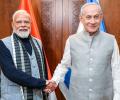
India and Israel share a deep historical bond, and Prime Minister Modi's visit to the Knesset marked a bold shift from past diplomatic hesitation to open strategic partnership.
He sought oil bonds from the finance ministry to cover 57.1 per cent of the total Rs 77,000 crore losses suffered by the oil companies in 2007-08.
This is to compensate for their under-recoveries on the sale of petroleum products during the current financial year. Indian Oil Corporation has been issued oil bonds worth Rs 5,817.27 crore, while Bharat Petroleum Corporation has been issued bonds worth Rs 2,144.32 crore. Hindustan Petroleum Corporation has got bonds worth Rs 2,038.41 crore. Prior to this, bonds worth Rs 60,967 crore had already been issued.
The company is losing about Rs 80 crore (Rs 800 million) a day on sale of petrol, diesel, kerosene and cooking gas as the government has not allowed oil marketing companies to raise prices in line with the increase in international crude oil prices.

Among the Sensex constituents, Asian Paints, Tech Mahindra, HCL Technologies, Tata Steel, Maruti Suzuki India, Sun Pharmaceuticals, Tata Consultancy Services, ICICI Bank, Bajaj Finance, UltraTech Cement, Mahindra & Mahindra and Tata Motors Passenger Vehicles were the laggards. However, Eternal, Titan, Adani Ports, Bharat Electronics Ltd, State Bank of India, Bajaj Finserv, NTPC and Bharti Airtel were among the gainers.

Minister of state for petroleum and natural gas Jitin Prasada in a written reply to a question in the Lok Sabha said the finance ministry is yet to approve the oil bonds. Indian Oil, Bharat Petroleum and Hindustan Petroleum lost Rs 11,853 crore (Rs 118.53 billion) in revenues on not being allowed to raise LPG and kerosene prices in line with the cost during April- September.
What is becoming increasingly clear is that they are an opaque and hugely inadequate response to the current problem of sustained increases (over the last five years) in global oil prices.

I am inclined to believe that the Venezuela adventure is not an indication of American strength, alas, but rather of American weakness, points out Rajeev Srinivasan.
State-owned Indian Oil Corp (IOC) is looking at selling oil bonds worth Rs 1,000-1,500 crore (Rs 10-15 billion) this month in the open market even as its crude oil import bill has declined by about 67 per cent on falling global rates.

From the Sensex firms, Tata Steel tanked the most by 4.57 per cent. ICICI Bank, Power Grid, HCL Tech, Tech Mahindra, Infosys and Kotak Mahindra Bank were also among the laggards. Mahindra & Mahindra, State Bank of India, ITC and Bharat Electronics were among the gainers.

'We believe the truth is in the middle, and that India is at an important crossroads.'

What began as a mentor-protege relationship between UAE President Mohammed bin Zayed and Saudi Crown Prince Mohammed bin Salman has now evolved into a broader contest over influence, strategy, and leadership in the Middle East, points out Asif Ullah Khan.
If crude oil prices stay at current levels, the Indian government would not be required to issue additional oil bonds to the four state-run oil marketing companies in the current financial year, Finance Minister P Chidambaram said on Monday. Oil retailers, however, are unlikely to cut prices of petroleum products in response to falling crude prices unless private retailers like Essar Oil and Reliance Industries Ltd restart operations and offer a lower price.
The petroleum ministry has sought additional oil bonds worth about Rs 13,000 crore (Rs 130 billion) to cover the revenue loss on fuel sale in the fourth quarter of the current fiscal.
The bonds, which will come over and above Rs 61,800 crore (Rs 618 billion) already issued to the three companies, would help them bridge the revenue loss they incurred on sale of petrol, diesel, liquid petroleum gas and kerosene in 2008-09, a petroleum ministry official said.

Though the government had earlier this year explicitly decided to compensate Indian Oil, Hindustan Petroleum and Bharat Petroleum for the losses they incur on selling domestic liquid petroleum gas and kerosene through public distribution system by way of oil bonds, the finance ministry has not issued any bonds for the three quarters.

The BSE Sensex has been one of the top-performing areas of investment in the past 40 years, consistently delivering double-digit returns in rupee terms, beating assets such as global equities, precious metals, and fixed income.
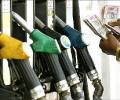
Three fuel retailers -- Indian Oil Corporation, Bharat Petroleum Corporation Limited and Hindustan Petroleum Corporation Limited -- lost about Rs 26,618 crore (Rs 266.18 billion) in revenues on selling petrol, diesel, domestic LPG and kerosene below cost during the first half of the current fiscal, a ministry official said.
The ministry of petroleum has approached the finance ministry to seek permission to give additional bonds worth Rs 10,000 crore to the three public sector oil marketing companies --Indian Oil Corporation, Bharat Petroleum Corporation Ltd and Hindustan Petroleum Corporation Ltd--to help them close the last fiscal with a profit.

WPI inflation data, trading activity of foreign investors and global cues would dictate trends in the stock market this week, analysts said.
 © 2026 Rediff.com - Advertise with us - Disclaimer - Privacy Policy - Sitemap - Feedback - About us - Terms of use - Grievances